
Loading...
Serving Paris, TX and surrounding areas. (903) 609-0442
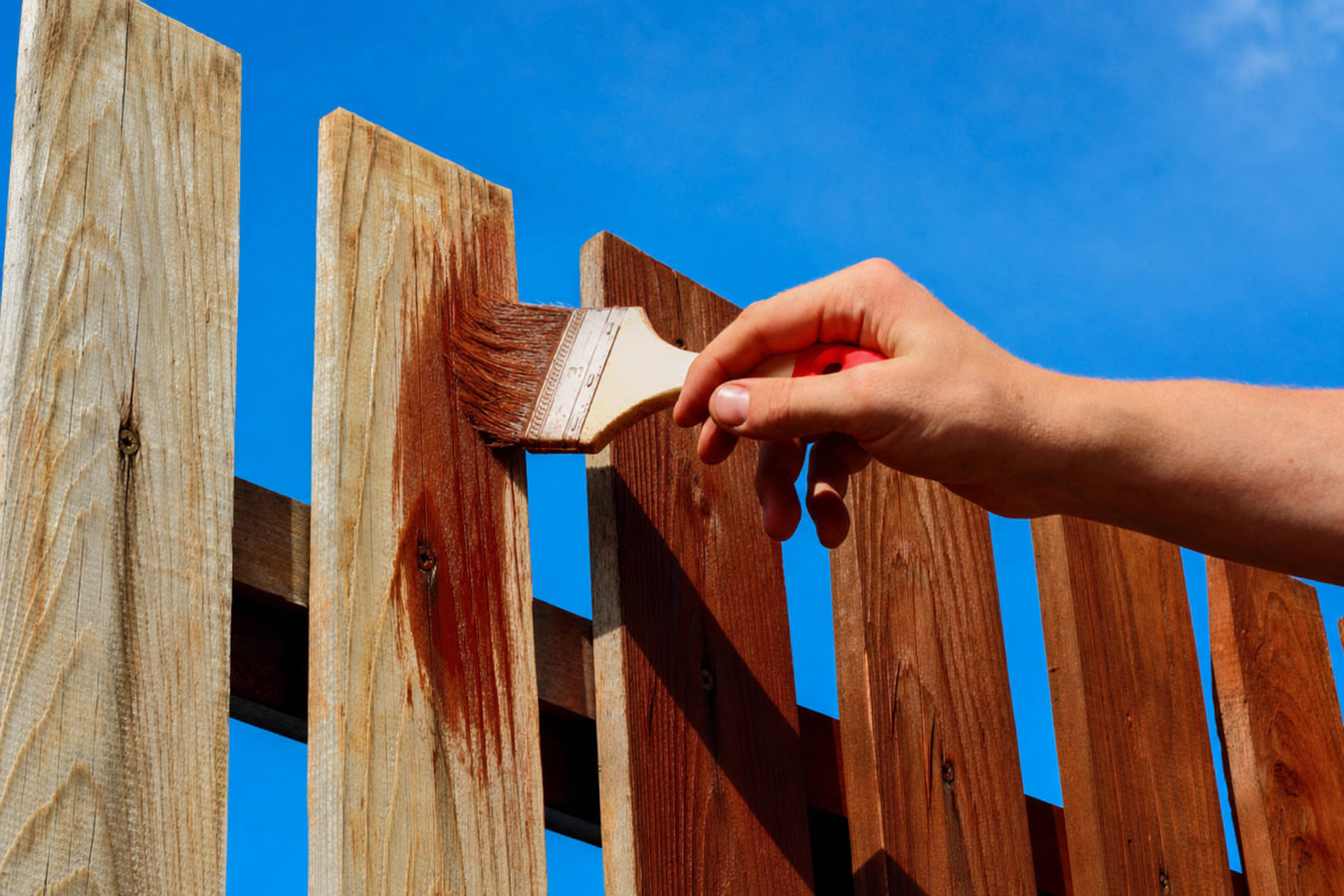
Paris summers bleach wood fast and the humidity feeds mold year-round. We clean, prep, and apply stain and sealer properly so your fence holds its color and stays solid through the season - not just until the first rainstorm.
Fence staining and sealing in Paris, TX protects wood from UV bleaching, mold, and moisture damage by soaking color and water-resistant ingredients into the wood fibers, with most residential jobs completed in one to two days and the protection lasting two to three years in Lamar County's humid climate.
Staining is not just about appearance. Paris gets over 50 inches of rain a year, and summer temperatures regularly top 95 degrees. That combination dries out and warps wood that has no protection, and it feeds the mold and mildew that darken boards and weaken them over time. A proper stain-and-seal job slows all of that down by keeping moisture from soaking in freely. If your fence is already showing advanced rot or structural damage, our fence replacement service may be the right first call before staining adds any value.
The prep work is what separates a stain job that lasts from one that peels off in a season. Before any product goes on, the fence has to be cleaned - typically pressure-washed and treated with a wood-cleaning solution - to remove dirt, old flaking finish, and any mold growth. Skipping that step is the most common reason a stain job fails early, and it is the first thing we check when we look at a fence before giving you a price. A well-prepared fence holds stain the way a clean wall holds paint.
When wood loses its natural color and goes gray, the protective finish has worn away and the sun is bleaching the fibers directly. In Paris, where summers are long and intense, this can happen in as little as two to three years on a south-facing fence. Gray wood is not ruined - it just needs a good cleaning and a fresh coat of stain before the damage goes deeper.
Splash a cup of water on your fence. If it soaks straight in rather than beading up and rolling off, the sealer is gone. Paris gets plenty of rain, especially in spring, and once water is soaking freely into the wood, mold and board swelling are not far behind. This simple test tells you more about your fence's condition than looking at it ever will.
Black or green streaks and fuzzy growth on fence boards are mold and mildew, which thrive in Paris's humid summers. This is not just cosmetic - mold works its way into the wood and weakens it over time. A professional cleaning followed by a fresh stain and seal will stop the growth and protect the wood going forward.
Smooth, well-maintained wood has a slight sheen and does not catch your skin. When the finish is gone and the wood has been through several wet-dry cycles - common after Paris's spring rain season - the grain opens up and the surface gets rough and splintery. That texture means the wood is drying out and starting to crack, and it is time to act before boards begin splitting.
We handle fence staining and sealing for wood fences of all sizes across Paris and Lamar County, using semi-transparent and solid stains matched to the condition of your fence and the look you are going for. Every job starts with a thorough cleaning - pressure washing and wood-cleaner treatment to strip out dirt, mold, and any old flaking finish - because nothing goes on a fence until the surface is ready to take it. For fences that have been sitting without treatment for five or more years, that prep phase takes longer and costs a bit more, but it is the step that determines whether your stain lasts two seasons or five. If some boards are too far gone to save, we will tell you before we start and give you honest options - including a connection to our fence replacement service if a full rebuild makes more financial sense than treating a failing structure.
For homeowners who are planning to install a new wood fence or who recently had one installed, staining and sealing right after installation - before the wood ever gets a chance to weather - is the best way to protect your investment from the start. We also work with homeowners who want to change the color of their existing fence, which requires a full strip and clean of the old finish before the new stain goes on. If you are considering a new wood fence installation alongside a stain job, we can bundle both into a single project so you are not managing two separate crews and two separate schedules.
Shows the wood grain while adding color and UV protection - the most popular choice for Paris homeowners who want natural-looking results that still hold up through summer.
Full color coverage that hides weathering and grain variation - a good fit for older fences with surface inconsistencies or for homeowners who want a uniform, finished look.
Preserves the natural wood color while adding a moisture barrier - best for new fences or recently replaced boards that do not need color but do need protection from Paris rain.
Pressure washing plus wood-cleaning solution to remove mold, mildew, and old finish before any new product is applied - the step that determines whether your stain job lasts or fails early.
Paris sits in a humid subtropical climate that averages over 50 inches of rain per year - significantly more than many parts of Texas. Combined with summer temperatures that regularly top 95 degrees, that moisture creates perfect conditions for mold growth and accelerated wood decay on any fence that is not properly protected. Most homeowners here need to restain every two to three years rather than the four to five you might expect in a drier part of the state. The clay soil around Paris compounds the problem by draining slowly and holding moisture against fence posts and lower boards for days after a heavy rain. Homeowners in areas like Paris and Sulphur Springs deal with these conditions every season, and a fence that was never sealed properly at the base will start showing rot from the bottom up before the rest of the boards even look worn.
Northeast Texas also sits in a severe weather corridor that sees strong thunderstorms and high winds each spring. After a major storm, demand for fence work spikes across Lamar County, and contractors book out fast. Scheduling a staining job in late winter or early fall - before storm season rather than after - keeps your fence in the best possible shape going into the most damaging weather, and it means you are not competing with every other homeowner in Paris for a contractor slot in April. The USDA Forest Products Laboratory has published research on how climate conditions affect wood finish performance - and humid subtropical regions like Paris consistently show the shortest recoat intervals.
Call or submit a form and we respond within one business day. We ask a few basic questions - how long is the fence, when was it last treated, are there problem areas - and schedule a free on-site visit to see the fence in person before giving you a written price.
Once you agree to the work, you get a scheduled date. We let you know what to do beforehand - usually trimming back plants growing on the fence and moving anything leaning against it. You do not need to be home, but being reachable by phone on the first day helps if we have questions.
The crew arrives and washes the fence thoroughly - pressure washer and wood-cleaning solution - to remove dirt, mold, and old flaking finish. The fence then dries completely, usually 24 to 48 hours. No stain goes on wet wood, because a stain job applied over moisture will fail early every time.
Once the wood is dry, we apply stain and sealer by brush, roller, or sprayer, working in sections for an even finish. Nearby plants and concrete are covered or taped off. After the job, we walk the fence with you, touch up any missed areas, and tell you exactly when the fence is safe for kids, pets, and sprinklers.
Free written estimate. No pressure, no obligation. We respond within one business day.
(903) 609-0442Every estimate we give is written and itemized - cleaning, prep, product, number of coats, all spelled out. You know exactly what you are paying for before anyone shows up with a pressure washer. Mid-job price changes do not happen when the scope is clear from the start.
We know how Paris humidity and clay soil affect wood fences, and we treat every cleaning job with that in mind - paying extra attention to lower boards and post bases where moisture damage starts first. Thorough prep is the reason a stain job lasts two to three years here instead of one.
If some boards are too far gone to take stain properly, we tell you before we start - not after you have already paid for a job that cannot deliver the result you expect. We would rather lose a small job than leave you with a fence that looks worse six months later.
We follow American Fence Association guidelines for surface preparation and product application. AFA standards exist because application method matters as much as product choice - proper technique is what separates a finish that holds from one that peels in a season.
We have been working on wood fences across Paris and Lamar County long enough to know what the local climate does to an unprotected fence - and what it takes to slow that down. Every job gets the same attention whether it is a short side fence or a full perimeter, because the finish either holds or it does not.
When staining and sealing is no longer enough, our fence replacement service removes the old structure completely and installs a new fence built for Paris soil and weather conditions.
Learn MorePlanning a new wood fence in Paris? We install pressure-treated wood fences built to hold up in Lamar County humidity - and ready for a proper stain finish from day one.
Learn MoreSpring slots fill fast after storm season - call today or submit a form and we will get back to you within one business day.