
Loading...
Serving Paris, TX and surrounding areas. (903) 609-0442
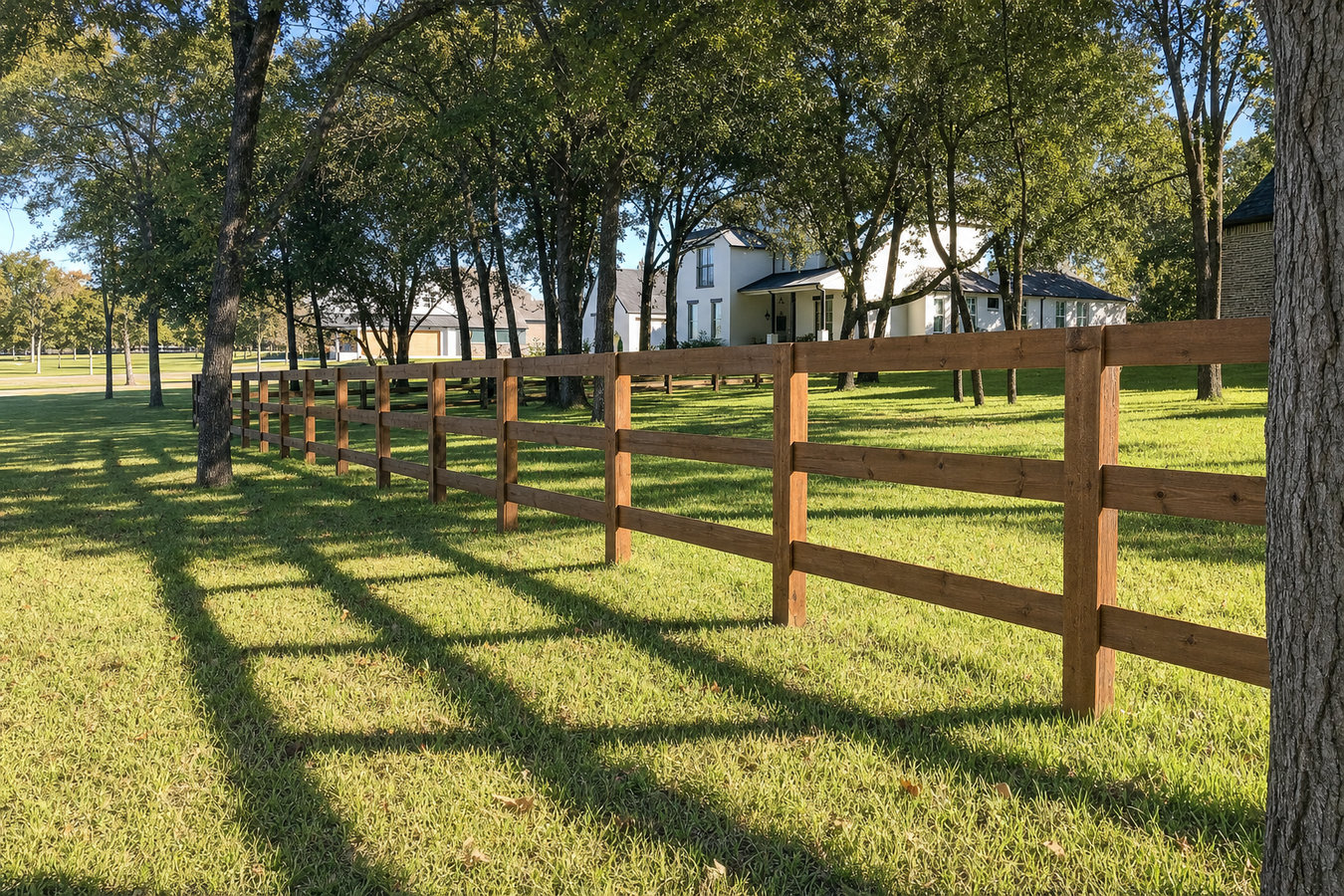
Lamar County clay soil and Northeast Texas storm season are hard on fences that were not built right. We set posts deep, brace corners properly, and choose wire matched to your animals - so your fence does its job for years, not just seasons.
Farm and ranch fencing in Paris, TX covers livestock containment, predator exclusion, pasture division, and property boundary marking using barbed wire, woven wire, or pipe fencing - most residential-scale projects complete within one to five days depending on footage and terrain. Unlike a backyard privacy fence, agricultural fencing has to hold up across hundreds or thousands of feet of open land, in soil that moves with the seasons and through storms that can flatten a poorly braced corner.
Paris and Lamar County have a long history of cattle ranching and small-scale farming, and the soil and weather conditions here are specific enough that you want a contractor who has built working fences in this area - not just residential privacy fences. If you also need a dedicated enclosure for dogs or smaller animals on your property, our pet and dog fencing service handles those layouts separately from the main pasture perimeter.
A good farm fence starts with a site walk to confirm the fence line against your property markers. We work from survey stakes or boundary markers you provide and flag any uncertainty before a single post goes in. Building on an incorrect line - even by a few feet - can create neighbor disputes that cost far more to resolve than the fence itself.
If you walk your fence line and see posts that are tilting, rising up, or sitting loose in the soil, the ground has been working against them. This is a common problem in Lamar County's clay-heavy soil, which swells when it rains and shrinks as it dries. A leaning post puts stress on every wire attached to it, and once one post goes, the tension in the whole line starts to shift.
Sagging wire is the most visible sign a fence is no longer doing its job. It can happen because the wire was never stretched tightly enough at installation, because a post has shifted, or because the fence has simply aged past its useful life. If you can push the wire down with your hand and it does not spring back, livestock can push through it - and they will find that spot before you do.
If cattle, horses, or other livestock are escaping regularly, the fence is failing somewhere - even if you cannot immediately see where. Animals are persistent and will find the weak point in a fence line well before you do. A full inspection by an experienced contractor can identify the problem spots and tell you whether targeted repair or full replacement is the better long-term investment.
In Paris's humid summers, wood posts that were not properly treated can rot where they meet the ground - often while the above-ground portion still looks fine. Press a screwdriver against the base of a post near the soil line. If it sinks in easily, that post has lost its structural integrity and is likely being held up mostly by the wire tension around it. A fence with rotted posts can look standing but will fail under any real pressure.
We install barbed wire, woven wire, and pipe fencing for agricultural and semi-rural properties throughout Lamar County. Every job begins with a site walk to agree on the fence line and identify any obstacles - trees, creek crossings, sloped terrain, or existing fence that needs to come out first. We use pressure-treated wood posts or steel posts depending on what your soil conditions and livestock type call for - we do not apply a single spec to every job. For properties that also need a dedicated pet enclosure or dog run as part of the overall layout, our chain link fence installation service handles those areas with the same crew and the same attention to post depth.
Corner and end post bracing is where a lot of farm fences fail, and it is where we spend extra time. A corner that is not properly braced will pull loose over time and drag the whole fence line with it - especially after a bad storm season. We treat bracing as a structural requirement, not an afterthought, because a fence that fails at the corner affects everything attached to it. Gate selection is part of the same conversation - we size gates around your equipment and choose hardware rated for agricultural use, not residential residential specs.
The most cost-effective option for large pasture perimeters and cattle operations across Lamar County - covers distance efficiently with the right post spacing.
A tighter barrier suited for smaller livestock, predator exclusion, or any property where a single strand of barbed wire is not enough to keep animals in or out.
Heavy-duty steel pipe construction for corrals, working pens, and high-traffic areas where livestock pressure would damage wire fencing quickly.
Sized for your equipment, hung with heavy-duty hinges, and built to handle daily use by working vehicles and livestock without sagging or failing.
Lamar County sits on expansive clay soils that swell in wet weather and shrink back during dry summers. That cycle repeats every year, and it is one of the most common reasons farm fences fail ahead of schedule in this region. Posts that were not set deeply enough or packed tightly at installation gradually heave out of the ground or lean as the soil moves around them. We account for this by setting posts deeper than the standard minimum and choosing post materials that resist the combination of moisture and dry heat that is normal here. We also recommend pressure-treated wood or steel posts over untreated wood, which can begin to rot at the soil line in just a few Paris summers. Homeowners and ranchers in Clarksville and Bonham face the same soil conditions, and we approach every job across this region with Lamar County clay in mind.
Northeast Texas also sees serious severe weather - particularly in spring, when high winds and occasional tornado activity can test a fence line significantly. A fence that was not properly braced at corners and end posts can fail dramatically in a strong storm, leaving you with hundreds of feet of downed wire and livestock out the morning after. We treat corner bracing as a structural requirement on every farm fence we build - not something we skip to hit a lower price. The Texas A&M AgriLife Extension publishes livestock fencing best practices that align with how we approach post depth and corner bracing in this region. Before any post goes in, we also confirm the fence line against your property markers - rural Lamar County has enough older tracts with disputed or unchecked lines that this step prevents far more headaches than it adds.
We ask a few basic questions before scheduling anything - approximate footage, what animals you are keeping if any, and whether there is existing fence to remove. This helps us show up to the site visit prepared. You do not need to have all the answers before you call.
We walk your property to see the terrain, soil conditions, and any obstacles. You point out exactly where you want the fence to run. After the visit, you receive a written estimate that breaks down materials, labor, and any additional costs like gate hardware or old fence removal - so you know exactly what you are comparing.
Once you approve the estimate, we order materials and set a firm start date. Spring and fall book quickly in Northeast Texas - lead times can stretch a few weeks during peak periods. We give you a clear start date and flag anything that might affect the schedule, like a stretch of wet weather that makes post-setting difficult.
The crew marks post locations, sets corner and end posts first since they anchor everything else, then stretches wire from one end to the other. Gates are hung last and adjusted to swing and latch correctly. Before we pack up, we walk the finished fence with you and address anything that needs attention while the crew is still on site.
We walk your land with you, give you a written estimate that separates materials from labor, and schedule around your season. Call us or submit a request and we will be in touch within one business day.
(903) 609-0442The clay soil throughout this area swells and contracts every year. Posts that are not set deeply enough will heave and lean over time, dragging the wire with them. We set posts beyond the standard minimum depth and use concrete mixes suited to local soil conditions - the same approach we apply to every farm fence job in this region, not a lighter residential standard.
Lamar County sees serious spring severe weather, and a fence that was not properly braced at corners can come down in a single bad storm. We treat corner and end post bracing as a structural requirement on every farm fence, because this is the part homeowners cannot see and the part that fails first when a fence is stressed by wind, animals, or soil movement.
Rural Lamar County has many tracts where fence lines have not been formally verified in decades. Building even a few feet over your legal boundary can create neighbor disputes that are expensive to resolve. We work from your survey stakes or boundary markers and flag any uncertainty before installation begins - not after. For additional boundary context, the Lamar County Appraisal District maintains property records that can help confirm your boundaries.
We provide itemized written estimates that break down materials and labor separately. A vague single-total quote makes it impossible to know what you are actually comparing when you get multiple bids. Our estimates give you the information you need to make an informed decision, and there are no add-ons after work starts that were not in the original quote.
Every farm fence we build is designed around how you actually use your land - with post materials matched to local soil, wire type matched to your animals, and gates sized for your equipment. That is the difference between a fence that looks fine on installation day and one that is still doing its job five years later through everything Northeast Texas throws at it.
Need a dedicated enclosure for dogs or smaller animals? We design containment setups built for the animals you are keeping.
Learn MoreChain link is a practical choice for utility areas, dog runs, and semi-rural property boundaries across the Paris area.
Learn MoreFall and early spring book fast in Lamar County - reach out now and we will walk your property and give you a written estimate with no obligation.